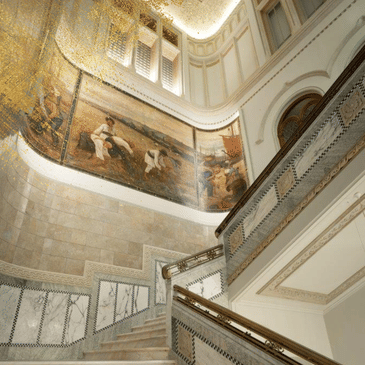
Behold, my dearest. We now find ourselves on the second floor, guarded by magnificent columns, each crafted in the spirit of Neo-Romanian architecture.
These columns, masterfully conceived in the Brâncovenesc style, enriched with Ottoman and Byzantine fineries, are adorned with symbols of our folk craftsmanship – wooden structures bearing within them solar rosettes, masterly tied knots, and the wolf's teeth. This style, which we have come to call Neo-Romanian, celebrates the resilience and perseverance of our people through time and hardship, evidenced by the strength and durability of its constructions.
Turning your gaze, you shall be captivated by the grand work of Cecilia Cuțescu Storck, which portrays in three facets the life and endeavor of humankind: "Agriculture," "Industry," and "Trade." This mural is not merely a testament to artistic skill but a living chronicle of the Romanian people's struggle throughout history.
"Agriculture" reminds us of those blessed, following Cuza Vodă's agrarian reform, with a strip of land, who went into debt to procure their working tools. Through loans, our bank aided these folks and contributed to the modernization of farming methods, thereby increasing the yield of the land.
"Industry," the engine propelling nations toward new horizons, found in Marmorosch a steadfast ally. By financing the construction of factories and mills, the bank played a pioneering role in transforming Romania into a country that capitalized on its resources and developed its technology, paving the way for progress and innovation.
And last but not least, "Trade," the link between people and cultures, was seen by our bank as a bridge to the wider world. Supporting the construction of necessary infrastructure for transport and communication, Marmorosch Blank opened the gates for sending Romanian products abroad, bringing wealth and knowledge to the country.
Let’s continue to delve together into the other mysteries concealed by this building.